We are a registered Medicare Provider


Snap-In Dentures vs Traditional Dentures: Which Option Is Better?

Losing teeth can change far more than your smile. It can affect how comfortably you eat, how clearly you speak, and even how confident you feel during everyday conversations. For many adults, dentures become a reliable solution for restoring both function and appearance. However, when exploring treatment options, patients often encounter two choices that sound similar but work very differently: traditional removable dentures and snap-in dentures.
Understanding the difference between these options can feel overwhelming at first. Many people wonder which solution offers better stability, comfort, and long-term performance. The truth is that the right choice often depends on factors such as oral health, lifestyle habits, and personal goals for restoring a smile.
In communities like Centreville, where families balance busy work schedules, school activities, and weekend visits to places like Bull Run Regional Park, convenience and reliability matter when choosing dental solutions. This guide explains how each denture option works, its advantages, and which patients may benefit most from each approach.
What Are Traditional Dentures?
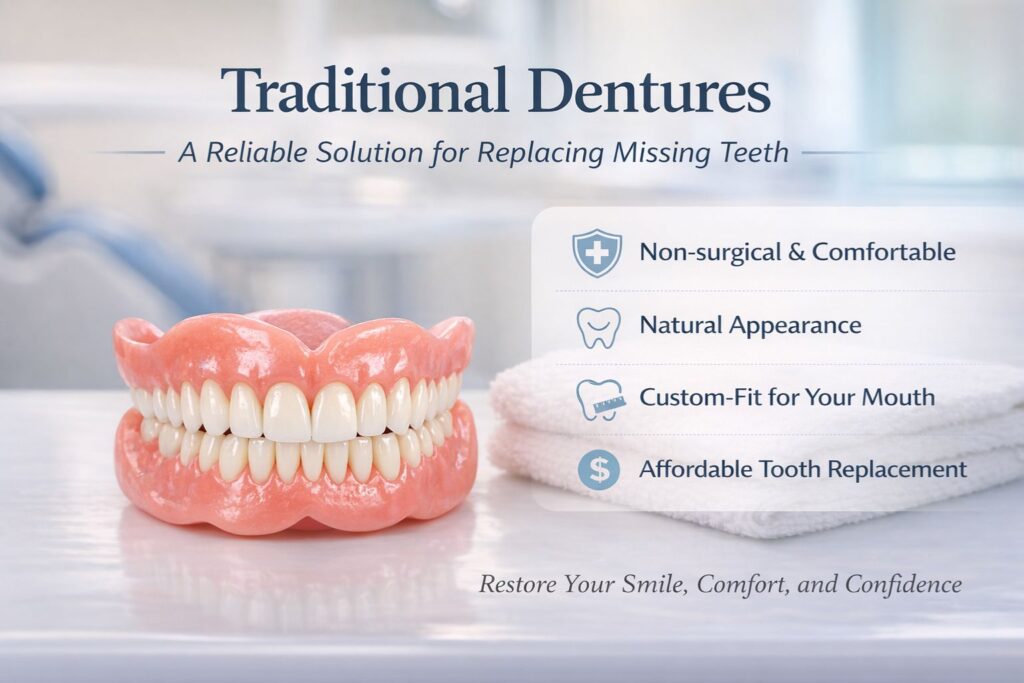
Traditional dentures are removable dental appliances designed to replace missing teeth and surrounding gum tissue. They have been used for decades and remain a widely recognized option for restoring smiles after tooth loss. These prosthetics are custom-made to match the shape of a patient’s mouth and the natural appearance of their teeth.
How Traditional Dentures Work
Traditional dentures sit directly on the gums and rely on the natural shape of the mouth for support. They are designed to replace either a full arch of teeth or several missing teeth. Most patients remove them daily for cleaning and overnight storage, which helps maintain oral hygiene and comfort.
Types of Traditional Dentures
There are two primary types of conventional dentures. Complete dentures replace an entire arch of missing teeth, either on the upper or lower jaw. Partial dentures replace only a few missing teeth and typically attach to remaining natural teeth for support.
Benefits of Traditional Dentures
One of the main advantages of traditional dentures is that they do not require surgery. This makes them suitable for patients who prefer a non-invasive treatment option. Dentures are also widely used and well understood in dentistry, providing a dependable way to restore a smile. Each appliance is carefully crafted to fit the patient’s mouth, helping create a natural appearance that blends with facial features.
For many individuals in the Centreville area, traditional dentures remain a practical solution for replacing missing teeth while restoring confidence in daily life.
What Are Snap-In Dentures?
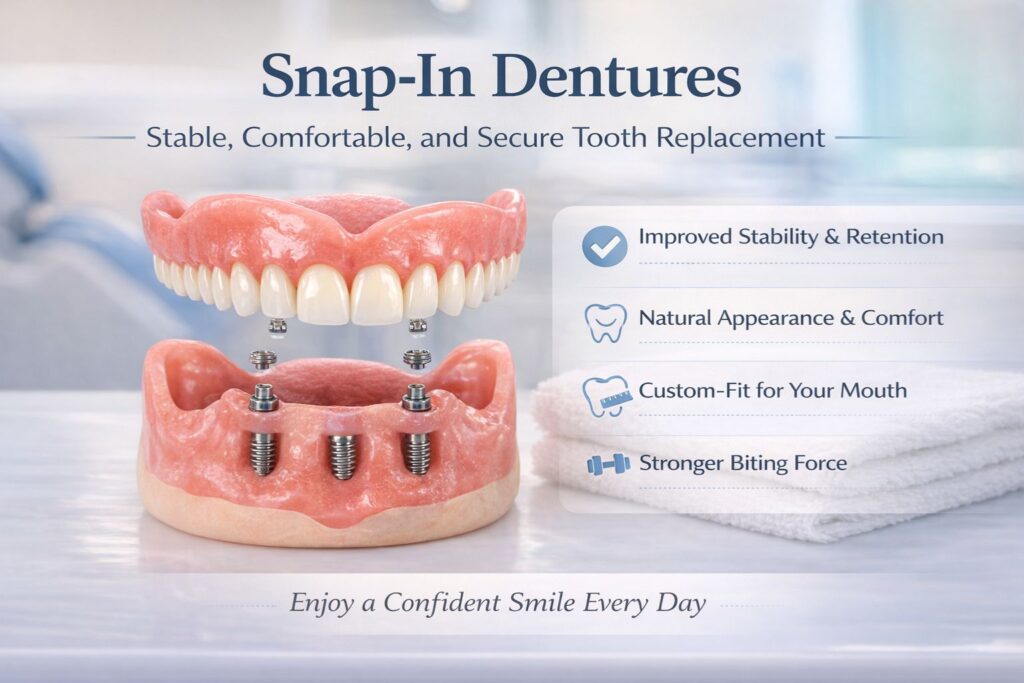
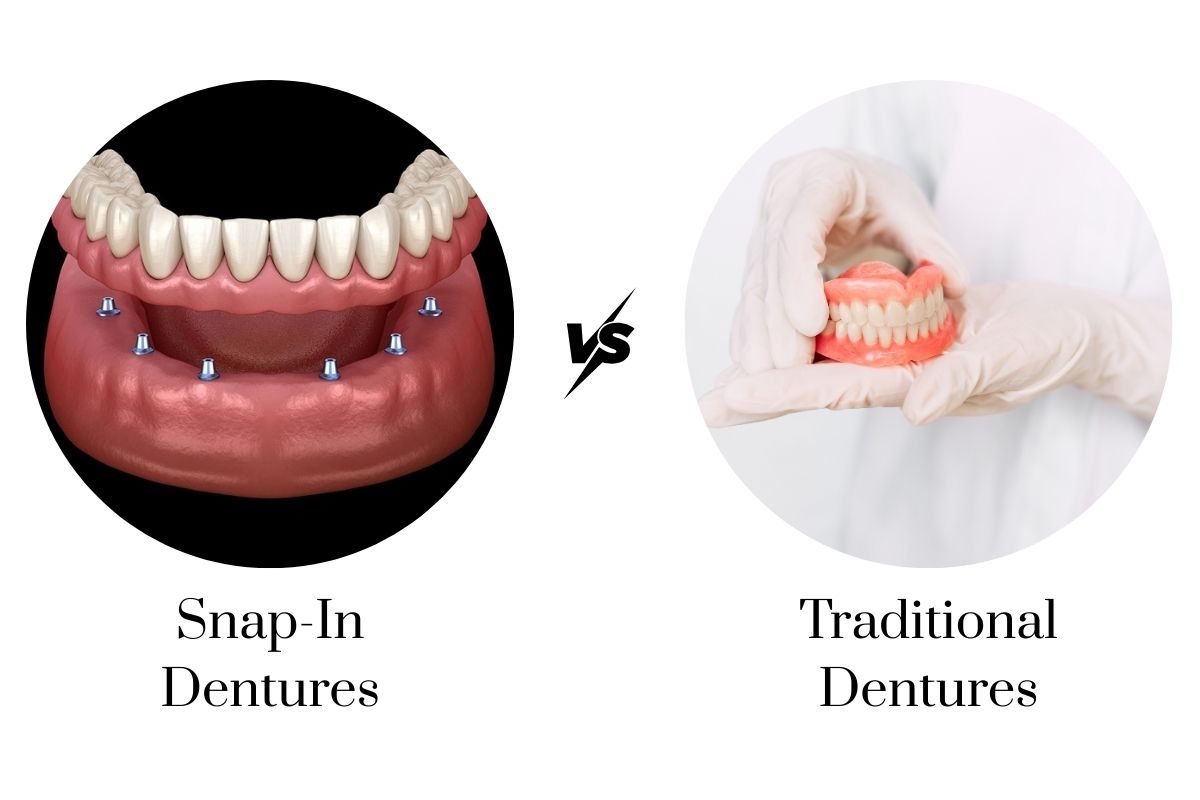
Implant-supported dentures represent a more advanced approach to tooth replacement. Instead of resting only on the gums, these dentures attach to dental implants placed in the jawbone. The denture then connects securely to these implants, allowing it to “snap” into place.
How Snap-In Dentures Work
Small titanium implants are placed in the jawbone during a dental procedure. Once healed, the denture attaches to these implants using special connectors. The result is a denture that remains removable for cleaning but feels much more secure throughout the day.
Key Features
Snap-in implant dentures rely on implant anchors that provide a stable foundation. These anchors help improve retention and reduce the movement that sometimes occurs with traditional dentures. Because the denture locks into place, it can feel significantly more secure during everyday activities.
Benefits of Snap-In Dentures
Many patients appreciate the improved stability that snap-in implant dentures in Centreville provide. Eating foods such as fresh apples from the Centreville farmers market or enjoying meals at local favorites like Ciao Osteria can feel more comfortable when dentures stay firmly in place. Reduced slipping also allows for clearer speech and improved confidence during conversations.
Another benefit is a stronger biting force. Because implants anchor the denture to the jawbone, patients can often chew foods more effectively than with conventional dentures.
Snap-In Dentures vs Traditional Dentures: Key Differences
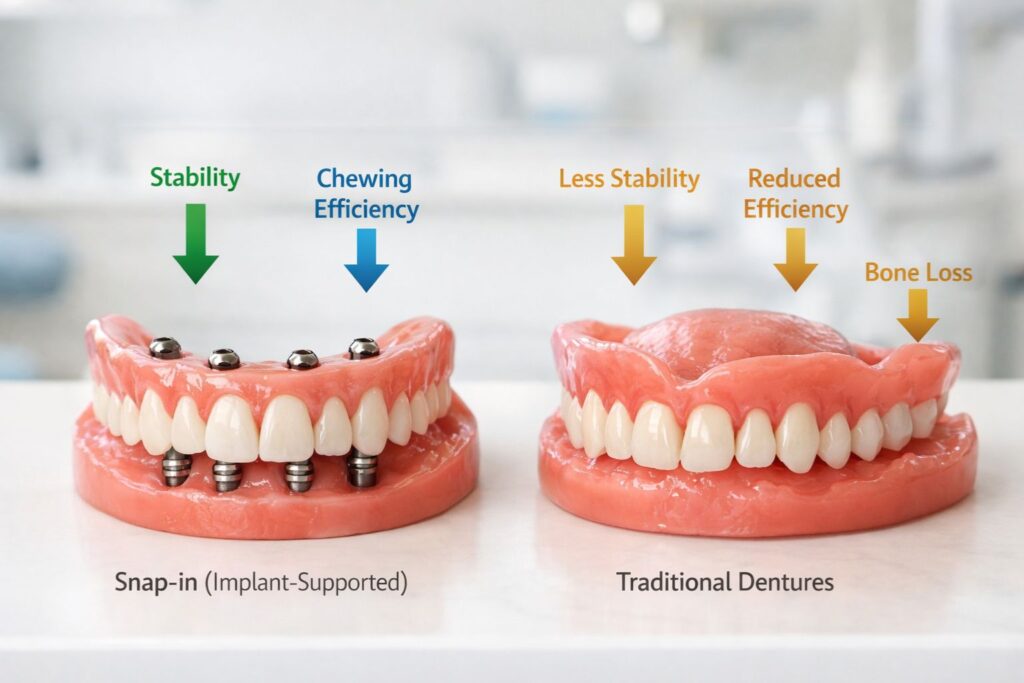
When comparing these two denture options, stability is one of the most noticeable differences. Traditional dentures rely on suction and the natural contour of the gums to remain in place. While modern dentures are designed carefully for comfort, some movement may still occur when chewing or speaking. Implant-supported dentures provide added retention because they connect directly to implants placed in the jaw.
Chewing efficiency also differs between the two solutions. Patients using implant-supported dentures often find they can bite and chew more confidently. This added stability allows them to enjoy a wider variety of foods without worrying about denture movement.
Another important factor involves jawbone preservation. After tooth loss, the jawbone can gradually shrink over time because it no longer receives stimulation from tooth roots. Dental implants help maintain bone structure by acting similarly to natural roots, which can help support long-term oral health.
Comfort during daily use is another consideration. Because implant-supported dentures remain anchored, many patients report feeling more secure throughout the day. This stability can make social interactions and meals feel more natural.
Maintenance and cleaning also differ slightly. Traditional dentures require daily removal for cleaning, while implant-supported dentures also require cleaning around the implants themselves to maintain oral health.
Finally, longevity plays a role in the decision. Dental implants can provide a durable foundation for dentures over many years, which contributes to the long-term stability of the restoration.
Which Option Feels More Natural?
When people explore denture options, one of the most common questions involves how natural the solution will feel. Comfort, speech clarity, and chewing ability all influence how closely a restoration resembles natural teeth.
Bite pressure is one of the biggest differences between the two options. Traditional dentures rest on the gums, which means biting pressure is distributed across soft tissue. Implant-supported dentures, however, transfer pressure through implants into the jawbone. This allows patients to apply a stronger biting force while eating.
Speaking comfort can also improve with implant-supported dentures. Because the denture remains securely anchored, patients often experience less shifting while talking. This can help words sound clearer and reduce the worry that dentures may move during conversation.
Confidence while eating is another important factor. Many individuals who receive snap-in implant dentures report feeling more comfortable enjoying a wider variety of foods. Whether attending local community events or dining at restaurants around Centreville, the improved stability allows meals to feel less stressful.
Reduced movement is often the key reason patients describe implant-supported dentures as feeling closer to natural teeth.
Who Is a Good Candidate for Each Option?
Choosing the right denture option depends on several personal factors. Every patient’s oral health, lifestyle, and treatment goals differ, which is why dental evaluations play an important role in the decision process.
Patients who may benefit from snap-in implant dentures often have sufficient jawbone to support dental implants. Adequate bone structure allows implants to integrate properly with the jaw. These patients also tend to prefer improved stability and stronger chewing ability, especially if they lead active lifestyles or frequently enjoy diverse foods.
Some individuals also appreciate the confidence that comes with a more secure restoration. For those who prioritize stability and long-term durability, implant-supported dentures may offer significant advantages.
Traditional dentures, on the other hand, may suit patients who prefer a non-surgical option. Because they do not require implant placement, treatment can often begin sooner. This approach may also be recommended for individuals with certain health conditions that limit surgical procedures.
Both options can successfully restore missing teeth. The ideal choice depends on personal comfort, health considerations, and the results patients hope to achieve.
Factors Dentists Consider Before Recommending Dentures
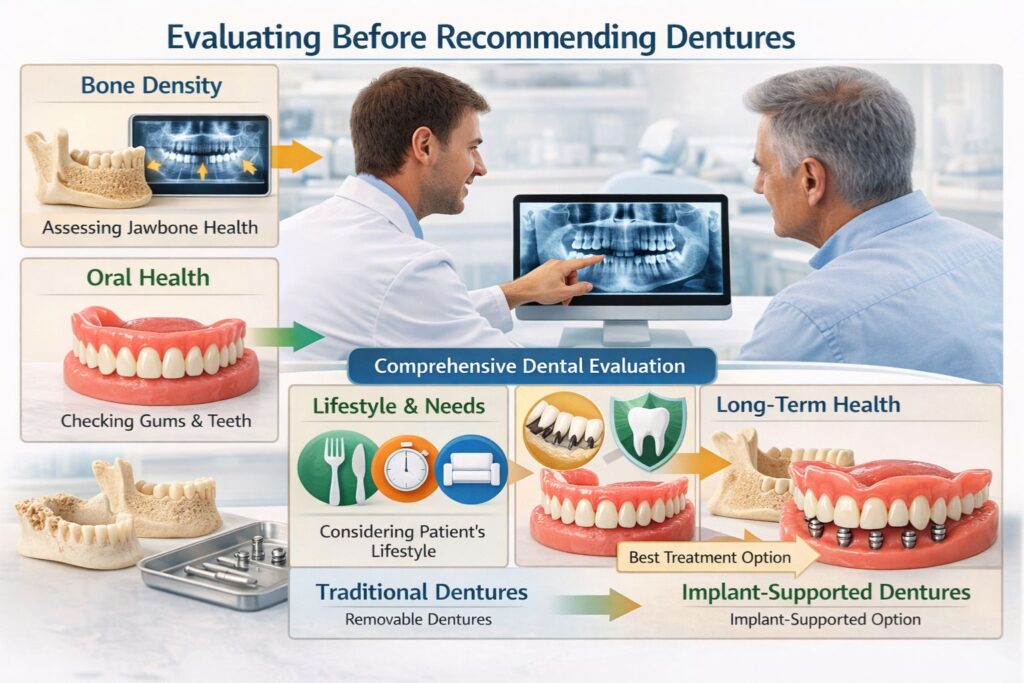
Before recommending a denture solution, dental professionals perform a comprehensive evaluation to determine which option will provide the most reliable results.
One of the first considerations involves bone density. Imaging technology helps evaluate whether the jawbone has enough strength to support dental implants. Adequate bone structure allows implants to integrate properly and provide stable support for dentures.
Oral health is another important factor. Dentists examine the condition of the gums and remaining teeth to ensure there are no underlying issues such as gum disease or infection. Healthy gum tissue is essential for maintaining both traditional dentures and implant-supported restorations.
Lifestyle habits may also influence treatment decisions. Individuals who enjoy a wide variety of foods or prefer greater denture stability may benefit from implant-supported options. Others may prioritize faster treatment timelines or non-surgical approaches.
Finally, long-term oral health goals play a role in determining the best solution. Dentists consider how each treatment option may affect bone health, comfort, and durability over time.
Long-Term Maintenance and Care
Proper care plays a vital role in maintaining dentures and supporting long-term oral health. Both traditional and snap-in implant dentures in Centreville require consistent cleaning routines to prevent plaque buildup and maintain fresh breath.
Traditional dentures should be removed daily and cleaned using a denture brush and recommended cleansing solution. This helps remove food particles and bacteria while protecting the denture material. Overnight soaking also helps preserve the shape of the appliance.
Snap-in implant dentures require similar cleaning, along with special attention to the implant attachments. Keeping the area around implants clean helps protect the surrounding gum tissue and maintain the stability of the restoration.
Regular dental visits remain essential for both options. During routine checkups, dental professionals evaluate how dentures fit, assess gum health, and ensure that implants remain stable.
Maintaining healthy gum tissue and jawbone structure also supports long-term comfort. With proper care and regular professional guidance, dentures can continue to restore both function and confidence for many years.
Both traditional dentures and implant-supported dentures provide effective solutions for restoring missing teeth. Each option improves chewing ability, speech, and overall appearance. However, implant-supported dentures offer additional stability that many patients find appealing for daily comfort.
Traditional dentures remain a dependable solution for individuals who prefer a non-surgical approach or faster treatment. Ultimately, the best choice depends on personal health, lifestyle, and long-term goals for oral wellness.
Residents throughout Centreville and nearby communities deserve dental care that supports both comfort and confidence. If you are considering dentures or exploring replacement options for missing teeth, a personalized consultation can help determine the right approach for your needs.
To learn more or schedule an appointment, contact Centreville Family and Cosmetic Dentistry and take the first step toward restoring your smile.
Frequently Asked Questions
How long do snap-in dentures typically last?
Snap-in dentures can last many years with proper care and regular dental checkups. The implants supporting them are designed to provide long-term stability.
Do traditional dentures need adhesive to stay in place?
Some traditional dentures may require an adhesive to improve stability during daily activities. Adhesives can help reduce slipping and increase comfort.
Are snap-in dentures removable like traditional dentures?
Yes, snap-in dentures are removable even though they attach to implants. Patients remove them daily for cleaning and maintenance.
Can snap-in dentures improve chewing ability?
Snap-in dentures often allow stronger bite pressure compared to conventional dentures. This can make it easier to chew a wider variety of foods.
How are snap-in dentures cleaned?
Snap-in dentures are removed daily and cleaned using a soft brush and denture cleanser. Proper cleaning also helps maintain healthy gums around the implants.