We are a registered Medicare Provider


Importance of Regular Dental Checkups for Children

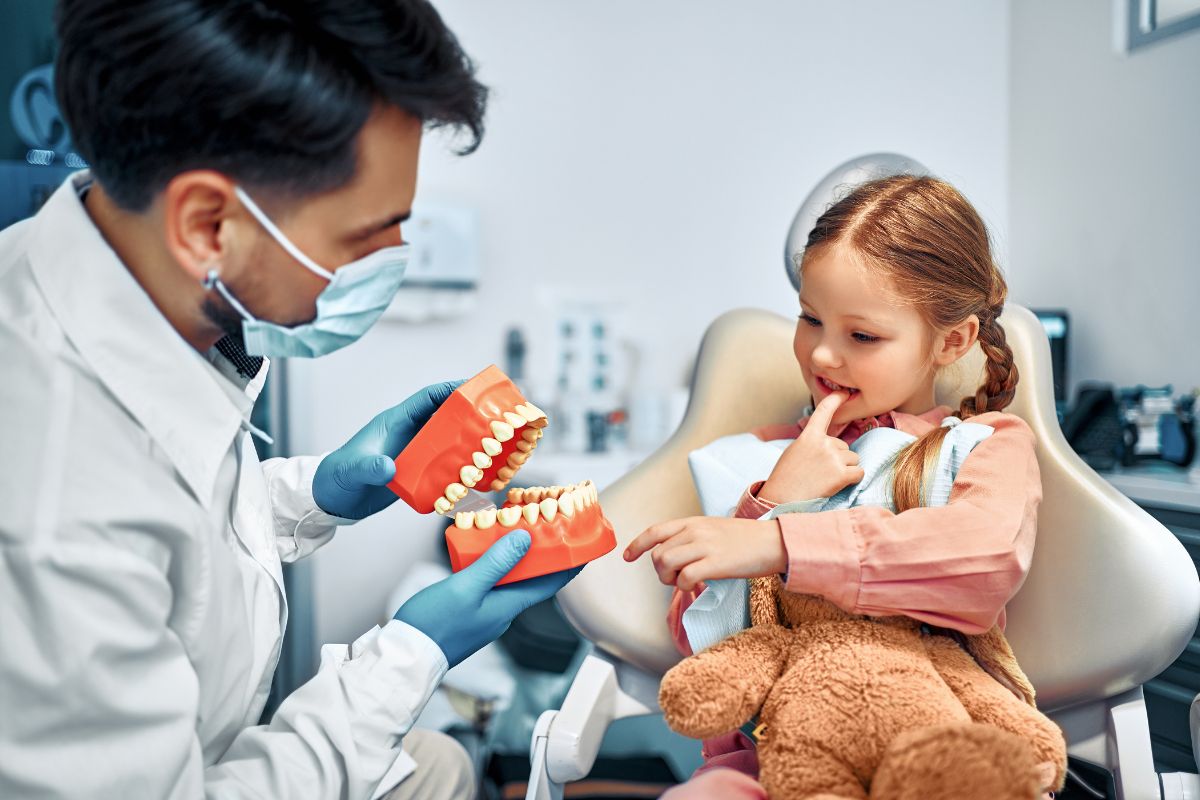
Children grow fast, and their oral health changes just as quickly. What looks fine today can shift within months as new teeth come in, habits develop, and daily routines evolve. Many parents focus on brushing and diet, but routine checkups play a different role. They help track development, catch early signs of problems, and guide children toward long-term healthy habits.
Skipping visits may not seem urgent when there is no visible issue. However, dental conditions in children often begin quietly. Early visits allow a dentist to monitor growth, check alignment, and identify concerns before they become more complex. This blog explains why these checkups matter and how they support your child’s overall well-being.
Why Early Monitoring Matters More Than You Think
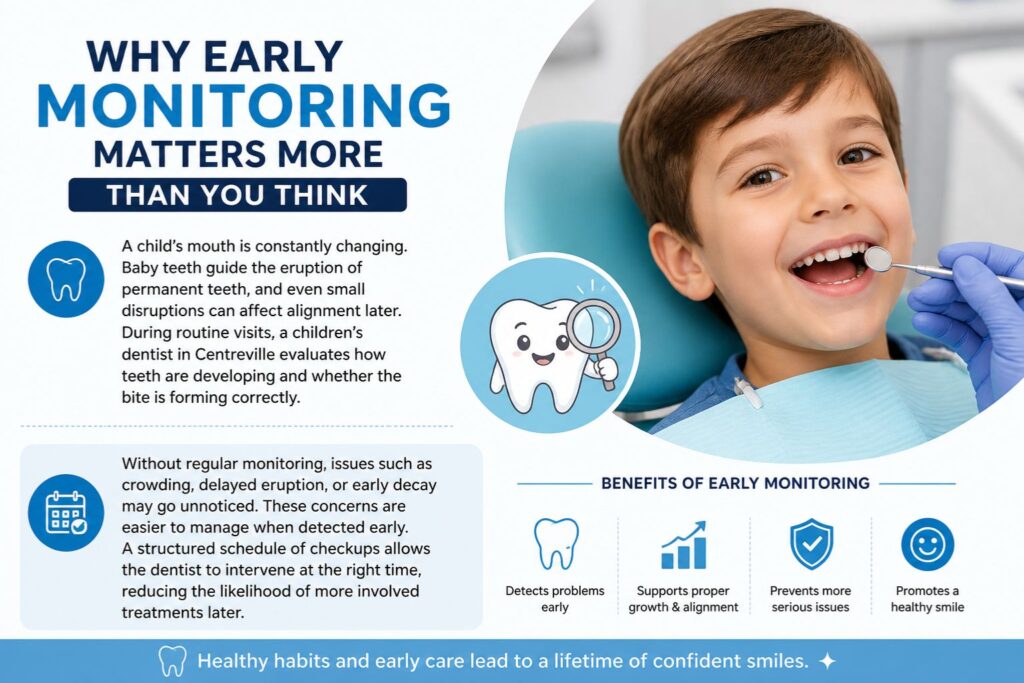
A child’s mouth is constantly changing. Baby teeth guide the eruption of permanent teeth, and even small disruptions can affect alignment later. During routine visits, a children’s dentist in Centreville evaluates how teeth are developing and whether the bite is forming correctly.
Without regular monitoring, issues such as crowding, delayed eruption, or early decay may go unnoticed. These concerns are easier to manage when detected early. A structured schedule of checkups allows the dentist to intervene at the right time, reducing the likelihood of more involved treatments later.
What Happens During a Routine Checkup?
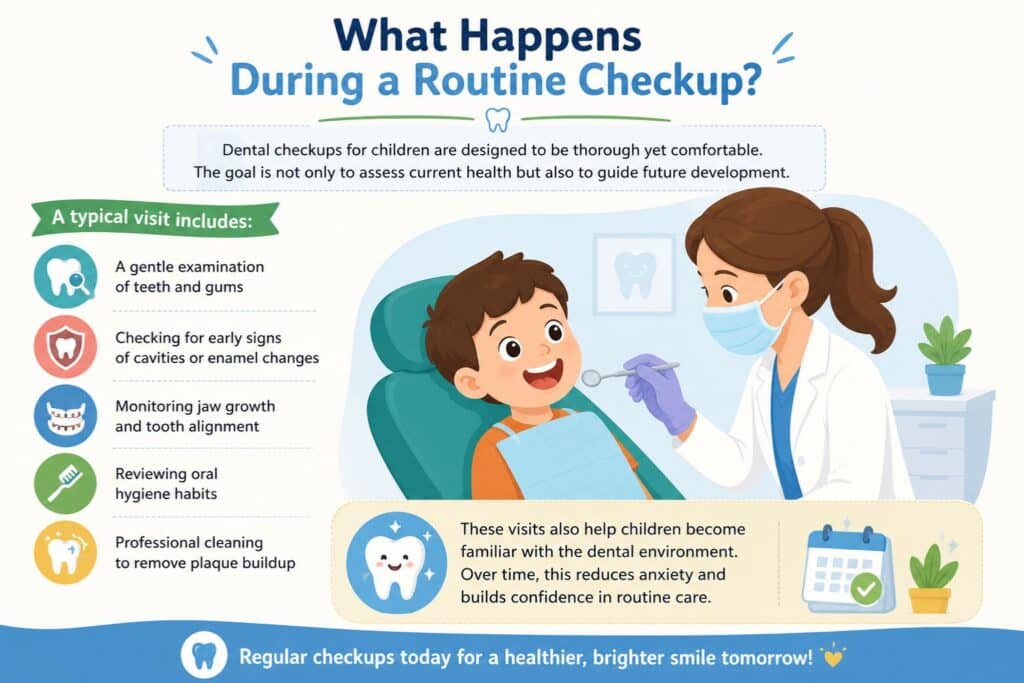
Dental checkups for children are designed to be thorough yet comfortable. The goal is not only to assess current health but also to guide future development.
A typical visit to a children’s dentist in Centreville includes:
- A gentle examination of teeth and gums
- Checking for early signs of cavities or enamel changes
- Monitoring jaw growth and tooth alignment
- Reviewing oral hygiene habits
- Professional cleaning to remove plaque buildup
These visits also help children become familiar with the dental environment. Over time, this reduces anxiety and builds confidence in routine care.
Preventing Problems Before They Start
One of the biggest benefits of regular checkups is prevention. Children are more prone to cavities due to developing brushing habits and dietary choices. Even small amounts of plaque can lead to decay if left untreated.
Routine visits allow the dentist to:
- Detect early-stage cavities before they worsen
- Apply protective treatments like fluoride
- Recommend sealants for molars prone to decay
- Address habits such as thumb sucking or teeth grinding
Preventive care reduces the risk of discomfort and helps maintain a stable oral environment as your child grows.
Building Strong Oral Hygiene Habits
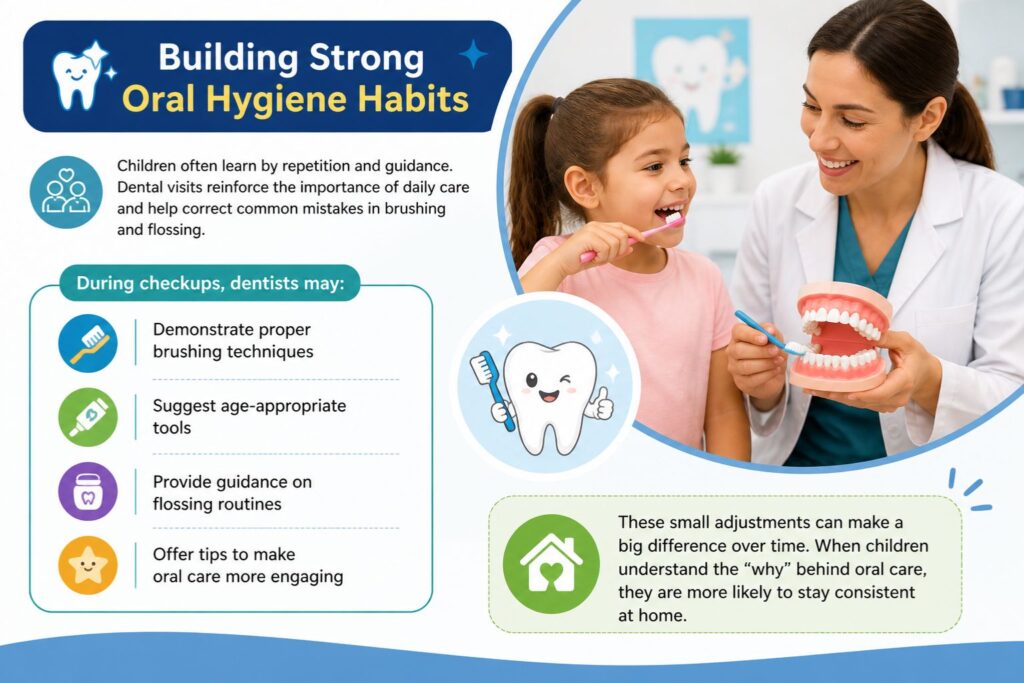
Children often learn by repetition and guidance. Dental visits reinforce the importance of daily care and help correct common mistakes in brushing and flossing.
During checkups, dentists may:
- Demonstrate proper brushing techniques
- Suggest age-appropriate tools
- Provide guidance on flossing routines
- Offer tips to make oral care more engaging
These small adjustments can make a big difference over time. When children understand the “why” behind oral care, they are more likely to stay consistent at home.
The Role of Diet in Dental Health
Food choices play a major role in oral health. Snacks that seem harmless can contribute to decay if consumed frequently without proper cleaning.
Routine visits help identify patterns that may affect your child’s teeth. Dentists often discuss:
- How sugary and sticky foods impact enamel
- The importance of balanced meals
- Timing of snacks and drinks
- Hydration and its effect on oral health
In areas like Centreville, where families often enjoy quick bites after school activities or weekend outings, these insights can help parents make informed choices without completely restricting treats.
Tracking Growth and Development
Every child develops at a different pace. Regular checkups allow dentists to track these changes and ensure everything is progressing as expected.
This includes:
- Monitoring the transition from baby teeth to permanent teeth
- Identifying spacing or crowding concerns
- Evaluating jaw development
- Planning for future orthodontic needs if necessary
Early identification of developmental concerns often leads to simpler and more effective solutions.
Reducing Fear and Building Confidence
Children who visit the dentist regularly tend to feel more comfortable over time. Familiarity with the environment, staff, and process helps reduce fear and uncertainty.
Benefits of consistent visits include:
- Increased comfort during examinations
- Better cooperation during procedures
- Reduced anxiety about dental care
- A positive attitude toward oral health
This confidence often carries into adulthood, making it easier to maintain regular care in later years.
How Often Should Children Visit?
Most children benefit from checkups every six months. However, some may need more frequent visits depending on their oral health needs.
Factors that may influence frequency include:
- Risk of cavities
- Existing dental conditions
- Orthodontic concerns
- Oral hygiene habits
A children’s dentist in Centreville can recommend a schedule tailored to your child’s specific needs, ensuring consistent and effective care.
Signs Your Child Should Visit Sooner
While routine visits are essential, certain signs indicate the need for an earlier appointment.
Watch for:
- Tooth pain or sensitivity
- Bleeding or swollen gums
- White or dark spots on teeth
- Difficulty chewing
- Persistent bad breath
Addressing these symptoms early can prevent further complications and keep your child comfortable.
Supporting Your Child Between Visits
Dental care does not end at the clinic. Daily habits at home play a major role in maintaining oral health between checkups.
Encourage:
- Brushing twice a day with fluoride toothpaste
- Flossing once daily
- Limiting sugary snacks and drinks
- Drinking water regularly
- Using protective gear during sports
Consistency at home combined with routine visits creates a strong foundation for long-term oral health.
A Healthy Smile Starts with Consistency
Regular checkups do more than maintain clean teeth. They provide a structured approach to monitoring growth, preventing issues, and guiding children toward lifelong habits. When visits become part of a routine, oral health feels manageable rather than overwhelming.
Centreville Family and Cosmetic Dentistry supports families by focusing on preventive care and early guidance. Scheduling routine visits ensures your child’s smile stays on track as they grow, helping avoid unnecessary complications later.
Take the Next Step Toward Your Child’s Oral Health
Keeping up with regular checkups is one of the simplest ways to protect your child’s smile. Each visit builds on the last, creating a clear picture of their oral health and allowing timely care when needed.
If you have been delaying a visit or noticing small changes in your child’s teeth, now is a good time to act. A consistent approach today can make a lasting difference in your child’s comfort, confidence, and overall well-being.
Questions People Ask About Children’s Dentists
1. When should a child have their first dental checkup?
A child should have their first dental visit by their first birthday or when the first tooth appears. Early visits help monitor development, identify risks, and guide parents on proper care, ensuring a strong foundation for long-term oral health.
2. How long does a child’s dental checkup usually take?
Most checkups take about 30 to 45 minutes, depending on the child’s needs. The visit includes an examination, cleaning, and guidance. Dentists focus on keeping the process smooth and comfortable to help children feel at ease during future visits.
3. Are dental X-rays safe for children?
Dental X-rays are considered safe and are used only when necessary. They help detect issues that are not visible during a standard exam. Modern techniques minimize exposure, ensuring that the benefits of accurate diagnosis outweigh any potential risks.
4. What if my child is afraid of dental visits?
It is common for children to feel nervous. Regular visits help reduce fear by building familiarity. Dentists use gentle approaches and clear communication to create a calm environment, helping children feel more comfortable with each appointment.
5. Can baby teeth get cavities even if they fall out?
Yes, baby teeth can develop cavities, and they should be treated promptly. These teeth guide permanent teeth and support proper chewing and speech. Ignoring decay can lead to discomfort and affect the development of adult teeth.
6. How can I help my child maintain oral health at home?
Encourage brushing twice daily, flossing, and limiting sugary snacks. Make oral care part of a daily routine and lead by example. Regular checkups combined with consistent home care help maintain healthy teeth and gums as your child grows.